You look like a Joan. That’s what Ciara’s flatmate Fidelma said to me one Friday night in The Round House. We’d gone out for drinks after work and Ciara had texted her to invite her along. Ciara’d gone up to get the first round in when she said it.
“Sorry, what did you say your name was again?” Fidelma asked, even though Ciara had only just introduced us.
“Joan,” I replied.
“Aye, you look like a Joan,” she said and then launched into a moan about the music they were playing and the time it was taking Ciara to get served at the bar.
Of course, I just stood there, my cheeks burning, and didn’t say anything. I’ve never been any good at standing up for myself. I forced a smile onto my face when Ciara got back with the drinks but I couldn’t what she’d said out of my head. When I went to the toilets, I spent ages staring at my reflection in the mirror trying to work out if it was my face that looked like a Joan or if it was the way I dressed.
The next morning, I was flicking through an old magazine I’d rescued from the bin in work over breakfast. There was an article in it about how people’s names can affect their personalities. It said that the names you pick for your baby can influence the way other people interact with them and therefore impact the child’s personality as they grew up. I turned my name over in my head and on my tongue. Joan. Joan. It did sound kind of boring and downtrodden. Maybe that’s why people don’t seem to take me seriously. It never occurred to me until that moment that I didn’t know a single other woman called Joan. Maybe it was an old-fashioned name and I just hadn’t realised. I couldn’t help wondering if my life would have been different if I was a Michaela, or an Isabelle, or a Sophie or something more sophisticated like that.
I know it’s stupid, but that night after a few glasses of wine at home, I looked up other Joans on Facebook. There were thousands of them, of course, of every age and size, from all over the world. The first was a soldier from America who’d been to Iraq. She didn’t even have a profile photo up, just some sort of badge with her battalion number on it. The second was a young teenager from Navan who had far too many selfies of herself in skimpy tops for my liking and the third a women from Liverpool who posts were all stupid inspirational quotes.
I clicked the filter button for Ireland at the side of the page, which brought the number of Joans down to about four-hundred and fifty-five and then Limerick, which gave me a more manageable fifty-two. I looked through every profile, studying their photos, asking myself if they looked like Joans. Nothing stood out. I couldn’t see anything that they all had, or didn’t have in common, with me, or each other. Maybe I was blinkered and couldn’t objectively see the Joan-ness that was so apparently obvious to Fidelma that night in the pub.
Some of the women included where they worked in their profiles. Joan Fleming was a nurse, Joan O’Grady worked in Brown Thomas, Joan Molloy was a teacher and Joan Deering worked with the council. I saved the photo of Joan O’Grady to my phone. She’d be the easiest one to bump into in real life. I don’t usually go to Brown Thomas. Dunnes Stores is more my kind of place for clothes. They always have something in my size and you can easily get a good going-out top for twenty euros there. I doubted if you could buy anything in Brown Thomas for twenty euros, except maybe a pair of socks or a knickers or something.
The following Saturday when I was in town, I ventured into the shop. It really was like another world. Even the people who worked there stood out. It wasn’t just their clothes that created the air of sophistication about them but their haircuts and make-up too, and the way they stood up straight and sure of themselves. I traipsed around all three floors, looking for the Joan whose photo I’d saved to my phone even though I wasn’t sure what I was going to do if I saw her.
I had given up and was making my way towards the front door again when I spotted her in the make-up section. I ducked behind a stand of moisturisers and watched her from there. She was doing someone’s make-up, applying foundation from a tube, then brushing powder all over it, before moving on to the woman’s eyes. She was tall and thin, confident in how she held herself, focused on her work yet still able to chat away to the customer. She explained each step she made, discussing the merits of one product over another.
If I wanted to find out more about her, I’d have to get closer but I wasn’t exactly in a fit state for having someone put makeup on me. I hadn’t plucked my eyebrows in months and my hair needed a wash. When I got home, I looked up the Brown Thomas’ website and found their forty-minute “Explore your Beauty” sessions listed under the makeup section. This Joan, Joan O’Grady, was rostered on for all their Saturdays slots. I wasn’t sure I had much beauty to explore but I booked an appointment for the following Saturday morning. Since I never wore makeup, at least I wouldn’t have to fake my lack of knowledge about any of it.
On Friday night, I fretted over which bus to take to town the next morning. The nine o’clock bus would probably have got me into town in time but it can be hit or miss on Saturdays and I didn’t want to arrive flustered. I took the eight-thirty one instead and arrived into town far too early for my appointment. I had to walk the streets to kill time until the shop opened but it gave me a chance to go over the list of questions I wanted to try to drop into conversation.
- Do you live on your own or with friends?
- Are you still renting or do you own your own place?
- Did you go to college?
- Did you always know you wanted to work in make-up and beauty?
- Where do you usually go out?
Eventually, the time came to go in and take my seat with Joan. I was too busy trying to remember my questions and her answers to pay much attention to what she was doing to my face. She was lovely and we kept chatting after I’d gone through all of my pre-prepared questions.
“How often do you ring your mother?” I asked her.
“Oh, maybe once a week, depending on how busy I am,” she said. “We sometimes meet up for coffee on Mondays when I’m off but there’s no set schedule or anything.”
“Wow. I’d love to be able to get away with that,” I said. “I have to call mine every day. It’s always been just the two of us so I find it hard to say no to her. She’s good at the old guilt trips.”
It was only when she stood back at the end that I really had the chance to see what she’d been doing all that time. I hardly recognised myself. The make-up wasn’t caked on like you see on some of the young ones but I looked younger and fresher somehow. You could see the eyeshadow and blusher if you looked closely but not the actual foundation and powder. They were blended in seamlessly. I wasn’t mad about the bright shade of red lipstick she’d used. You need a bigger personality to pull off that sort of ‘look at me’ shade. I told her I loved it, of course, what else could I say, and promised that I would come back and buy some of the products she must have been on commission trying to sell she mentioned them so much. When I got outside, I took a tissue out of my bag, wet it with my water bottle and rubbed the lipstick off.
On the bus home, I wrote down what I could remember of Joan’s replies so I wouldn’t forget them. I read over my notes at the kitchen table. It was clear that, not only did this Joan not look or dress like me, but she was nothing like me at all. She was smart and sexy and glamorous. She had a clear vision of what she wanted to do all her life and nothing would stop her. Definitely not like me then, more the opposite of me. She lived with her boyfriend who was ambitious and handsome, if you were to believe her, which I did. They were saving up to buy a house next year. I hadn’t so much as kissed a man in years, let alone ever contemplated moving in with one and it would take me another years to save up enough money for a deposit for a house on my wages.
But one example does not a case make, as my old science teacher used to say. I’d need to look at more Joans before I could figure out if what, if any, commonalities there were between us. It took me a few days to think of a way I could easily get in touch with other Joans: the telephone directory. Now that it’s online, it’s a cinch to search. I made a list of the names and phone numbers of forty Joans, which seemed like a reasonable sample size, then spent the next few days thinking up an excuse to call them.
The next Saturday morning, I rang each of the Joans on my list and told them I was doing a survey for the County Council in their area.
“Good morning,” I said cheerfully to each in turn, reading from the script in front of me. “I work with the Development Office of the County Council and we’re doing a survey on the lifestyles of women in the area. It’s to make sure that we’re catering to everyone’s needs in the community. Would you be willing to answer a few questions? All details will be completely anonymous, of course.”
Five Joans didn’t answer the phone, one number gave a weird beeping sound like it had been disconnected, three people hung up on me and thirty women agreed to talk to me. I was a bit nervous for the first one and stumbled through my pre-prepared lines but by the last calls, I was on a roll and was even able to add in a bit of casual chat and banter as I scribbled their responses down. It took hours but I was surprised at how much I was enjoying talking to them all by the end. Maybe I had a future in market research.
Exhausted from having to stay upbeat and focussed for hours, I left collating their replies until the next day. I created a spreadsheet with their anonymised names down the first column (Joan1, Joan 2 etc) and my questions across the top row. It took me more than three hours to enter their responses. The Yes/No answers were easy to type in and so were the numerical ones about about age, marital status, how many years they were married, how many children they had, the number of siblings, income, and so on. Their hobbies were okay too, it was just that there were a lot of different answers. I’d expected things like watching TV, walking and baking but hadn’t thought of knitting and crochet that some of the older ones did. There was one woman who was into archery and another who liked to dress up in camouflage gear and go paintballing with her friends at the weekends.
Their preferences for socialising were predictable enough, with most going to pubs or out to dinner at the weekends and a few who were mad into bingo. It was the other answers which were harder to summarise for the spreadsheet. Joan15, went on a big rant about cycling infrastructure, public transport initiatives, water taxis on the Shannon, when the question had just been a simple one about whether she ever used the bus or not. Joan22 was one of the many who tended to meander. Her answers seemed to be more about other people than herself. The ‘How would you describe your physical health?’ question set her off about a fella living down the road from her whose sister-in-law had been waiting for more than six years to get her hips done.
Eventually, I managed to enter something into every cell of the thirty by twenty grid I’d set up. I tried to find common patterns in the data but there were so many variables, it was hard to see any. I thought that having the information in front of me in black and white columns would make it magically come to life and make sense to me but it wasn’t as easy as that. There were the single V married Joans, the ones with siblings V the only children, the mothers V the childless, the sedentary ones V the active ones, the careerists V the unemployed and housewives, those in good health V the sickly, the glass half-empty Joans V the overly-optimistic personalities. Some of them were dull and reserved, while others were interesting and talkative but none of them were the same as each other, or me. No matter how hard I looked, I couldn’t see any common Joan-ness between us all. It was after eleven that night before I finally gave up, my eyes and head aching from staring at the screen all day. I emailed the spreadsheet to myself as a backup before dragging myself off to bed.
I was on my way to my desk in work the next morning when John from Sales called out to me from the other side of the room.
“Hey Joan, what was the spreadsheet you sent me last night about? I couldn’t make any sense of it.”
My heart thumped as I pulled out my phone to check the email I was supposed to have sent to myself last night. It was there in black and white; I’d sent it to John by mistake. I’d had his personal email since the two of us organised the night out for Emily when she was leaving last year. I must have hit his name instead of my own.
“Sorry, John,” I said. “I’m an awful eejit. I meant to send it to myself as a backup. It’s, eh… something I was helping my mother with. She’d doing a beginner’s computer course and she needed help with a spreadsheet she was working on. Will you delete it?”
“Sure, no problem. You’re definitely still Mammy’s girl anyway,” he said. “She used your name for every single entry in it.”
“I know, it’s mad like. You’d think she couldn’t have thought of any other names to use in it.”
I sat down at my desk, already feeling exhausted with the day, but proud of my quick thinking. That’s not usually something I’m good at. All those fake survey calls must have been good practice.
My mother rang me for a chat later that night.
“Why did you call me Joan?” I asked her.
“I had a bit of a thing for Joan of Arc when I was young,” she said. “You know, she was a bit of a culchie, like me, but she ended up being a soldier and led some famous battles and everything.”
“Really? Joan of Arc?”
“Yeah. She was brilliant. Of course, she was way before her time. There was no women’s lib back then, so they accused her of being a witch and burned her at the stake. She was only nineteen when she died.”
“Wow,” I said. “You named me after someone who was burned alive.”
“Well, I thought having a hero’s name would shape a person, inspire them, make them stand that bit taller but…that didn’t quite work out, did it?”
If it was anyone else, I might have missed the slight, but my mother’s barbs always hit their target.
“One of the charges at her trial was wearing men’s clothes,” she continued. “So, I suppose you have that in common.”
“I don’t wear men’s clothes,” I argued back.
“Well, I never see you in skirts or dresses,” she said. “It wouldn’t kill you to dress up a bit now and then.”
“Look Mom, I have to go. The news is just starting,” I said, unmuting the TV so she could hear the intro music.
“But you never watch the news.”
“Well, there’s something on I want to catch. I’ll talk to you tomorrow.”
I muted the TV again while I thought about this new information. I’d been called after someone who was brave and heroic but, despite my mother’s hopes, those traits hadn’t been magically bestowed onto me. I thought about all the fretting I’d done over Fidelma’s comment and how much I’d gotten carried away with things over the past few weeks. I opened up the spreadsheet on my laptop and thought about all the work I’d put into making up the survey, calling all those women and typing all of the information in. I’d learnt absolutely nothing about myself from any of it except that we didn’t neatly fit into a class of our own.
I remembered the panic I’d felt that morning in work when I thought that John might have found out what I’d done. It was a close call, too close. People thought I was a bit odd as it was. I doubted they’d understand the rationale behind my research. I closed the spreadsheet, deleted it, emptied my Trash Can and thought that maybe I should embrace my Joan-ness, now that I knew who I was named after. What would Joan of Arc have done if someone had questioned or insulted her? She’d probably have drawn her sword on them. What she definitely wouldn’t have done is work herself into a frenzy for weeks over a flippant remark someone made about her. I decided from that moment on to use Joan as my guiding force. When I’m unsure of how to react or what to say or do in a situation, I take a breath and ask myself what Joan of Arc do? Some people talk to God. I talk to Joan. I try my best to channel her single-minded, calm, resolute warrior spirit through me. I say no to people a lot more, I speak up more at work meetings and I try not to be so timid. I’m getting better at it every day.
“Something’s different about you this past while,” Ciara said to me one Saturday a few weeks ago, when we were out for coffee. “You’re more… outspoken and… confident.”
“Am I?”
“Yeah. It’s good like. It suits you.”
I gave Joan a silent thanks that day for helping me out.
I’ve stopped ringing my mother every day, and sometimes, I don’t even answer when she calls me. She’s not too happy about the new, improved me but it gives me particular pleasure to practice my indifferent, impenetrable Joan of Arc-ness on her more than anyone else. She quite literally asked for it when she gave me my name.
This new affinity with my namesake has helped me reclaim my own identity, or maybe even find it for the first time. I’m proud to be a Joan now. The Fidelmas of this world, my mother and the rest of you can like it or lump it.
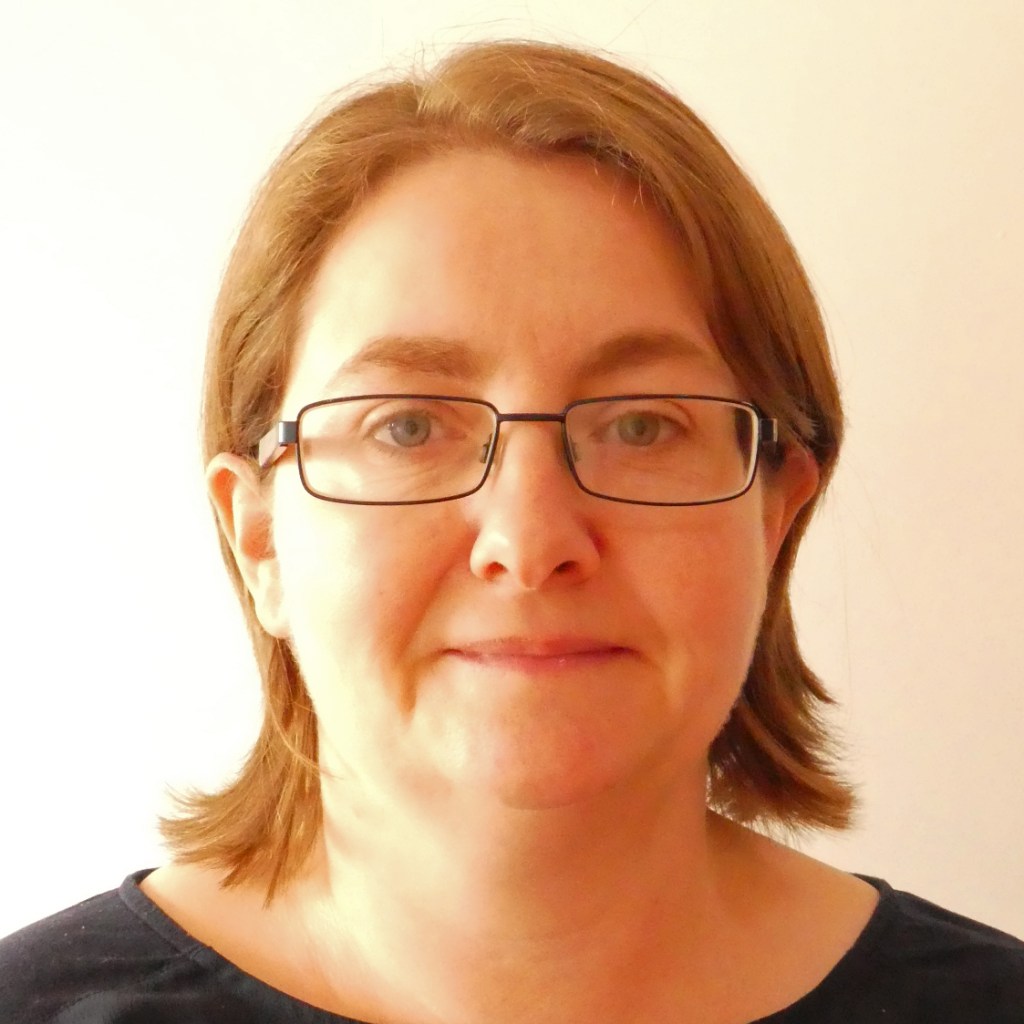
Margaret Cahill is a short story writer from Limerick, Ireland. Her fiction has featured in The Milk House, époque press é-zine, Ogham Stone, Honest Ulsterman, HeadStuff, Silver Apples, Autonomy anthology, Incubator, Crannog, Galway Review, Limerick Magazine, Boyne Berries and The Linnet’s Wings. She also dabbles in writing about music and art, with publications on HeadStuff.org and in Circa Arts Magazine.
Twitter: @margaretcahill_
 Idle Ink