From the road, the modern building looked out of place – as though it had been dropped into the Kansas wasteland by accident, meant for another location, but destined to end up here. We stood in silence, neither of us with any constructive thing to say and already exhausted in the creeping summer sun.
My eyes fell to the cheap sign that didn’t match the rest of the aesthetics: The Museum of Museums. The sign would have fit better in one of those old time tourist traps and looked at least twenty years older than the stark white behemoth it guarded.
“What do you think?” Casey asked. “Worth a shot?”
“Sure,” I agreed, “Maybe they’ll have a phone.”
Though we both said yes, neither of us took a step. Casey was always trying to push ahead of me so why not let her try the weird door first?
“Come on,” Casey said finally, moving ahead of me and opening the heavy wooden door.
The lobby was eerily empty. Somewhere soft piano music played barely loud enough for us to hear. There was an ornate, solid desk arranged for people walking in, but no one was behind it. The whole building seemed empty of any humanity, though just as well kept as the exterior.
“Hello?” I called into the void.
“What is this place?” Casey asked quietly.
“This is The Museum of Museums,” a voice said behind us.
We turned suddenly and looked at a tall, lanky man with a head full of salt and pepper curls and a small mustache who had appeared near the door on our right. He stood with a wide grin and outstretched arms, welcoming us in. His stance and mannerisms made me imagine that in another life he might have been the ringmaster of a circus or a traveling snake oil salesman. He wasn’t there when we entered. I looked behind him to see where he could have come from, but found no answers.
“What does that mean?” Casey asked.
The wiry man smiled mischievously, appearing amused at our confusion.
“It is a museum to celebrate all the museums in the United States of America.”
His voice was crisp and precise, the smile never leaving his face.
“How many museums are there?”
“35,000” he answered without hesitation, “approximately.”
“Seriously?” Casey said, I could tell she was impressed.
My guard went up, “Who are you?”
“Vincent. Vincent Vitelli, at your service. Would you like a tour?”
“Of the museum?”
He nodded, grin still wide.
“Sure.” Casey replied before I could speak up. “I’m Casey, this is my boyfriend Eli.”
“Actually, our car broke down and I’m trying to get a tow truck. I have no cell service here in the middle of nowhere. Can I use your phone?”
“Of course,” he said, “After the tour. This way.”
“We’re kind of in a hurry. We’re on our way to California.”
Nonsense was his only response.
He began his long stride towards the first door and I watched as Casey followed. I tried to reach out to stop her; we didn’t have time to waste walking around a museum with this stranger. As always, she wasn’t paying any attention to me, and had already disappeared after Vincent.
I followed them into a hall with the names of museums written from the floor to the ceiling in modern, black print, all 35,000 of them. All of it felt too out of place for a small off-the-road town in Kansas.
Vincent had turned around and was walking backwards down the hall, raising his arms again to gently touch the places on the walls around us as he spoke.
“The word museum derives from the Ancient Greek word mouseion – meaning a place dedicated to the muses. A muse, as you know, is the mythological creature of inspiration. We’ve dedicated this place to the idea of inspiration. We celebrate these houses across the country and hope that someone who sees our museum will be inspired to both visit other museums and appreciate the work that goes into creating and maintaining them.”
“What qualifies a museum to be in this museum?” Casey asked.
“Great question,” Vincent said, positioning his arms behind his back as he resumed walking forward, “There are really only three qualifications. The first, they must be in the United States. This is simply because there are too many museums around the world and just not enough space. Second, they must consider themselves a museum. They do not have to be recognized with the American Alliance of Museums, but it is a bonus if they are listed in their index. And third, we do require them to have been in operation at least three years. The museum business is a fickle one, and if we invest in including your museum in our museum, we have to ensure you are stable enough to will survive the test of time.”
Casey and I stood there, watching this odd man before us, unsure of what to say.
“Okay,” she said finally.
“Why are you in the middle of nowhere?” I asked. “You’d think a museum of museums would be in, like, New York, or somewhere with a lot of museums.”
“Do you not know where you are?” Vincent asked, the smile still present.
“Somewhere in Kansas?” Casey offered.
“Not just somewhere, you’re in the middle of the contiguous United States. The exact middle. There’s a marker only a few miles from here that reads: The GEOGRAPHIC CENTER of the UNITED STATES. LAT 39°50’ LONG – 98°35’ NE ¼ – SE ¼ – S32 – T2S – R11W Located by L.T. Hagadorn of Paulette and Wilson – Engineers and L.A. Beardslee – County Engineer. From data furnished by U.S. Coast and Geodetic Survey. Sponsored by Lebanon Hub Club. Lebanon, Kansas. April 25, 1940.”
Soft piano music drifted from the next room and we sat and stared at Vincent who just stared back. How much information did he have memorized?
“Wow,” Casey said. “that’s a lot…to take in.”
“Moving on.”
Vincent turned and disappeared through the threshold of the door on our right. We followed, knowing we had no choice but to see it through to the end.
“This is the hall of miniatures,” Vincent proclaimed as we moved into a smaller room.
The room was long and barren, with a row of pedestals on each side. On top of each pedestal was a little building, varying in design.
“What the hell,” Casey mumbled just loud enough for me to hear.
“These are miniatures of what?” I asked.
“Museums,” Vincent replied, matter-of-factly.
“Why?” Casey asked.
“Excuse me?”
Vincent had stopped his languid pace and turned abruptly to face Casey.
“Sorry, I just mean, what’s the purpose?”
He looked disappointed.
“What’s the purpose of anything?” he asked after a beat of silence. “It’s to be enjoyed. It’s to make people think. It’s simply to exist. To be.”
He raised his hands theatrically as he said it, looking up to the sky.
Casey nodded, but I wondered if she was just as confused as I was.
We resumed our slow walk, passing each little building in turn.
I stopped in front of The International UFO Museum and Research Center in Roswell, New Mexico. The building looked like an old movie theater. In the corner of the little reproduction was a silver disc-shaped UFO that had crashed into the building. Tiny people strolled on the sidewalk on their way to enjoy the weird and wonderful world inside.
“Why are tiny things so cute?” Casey asked beside me, looking at the little figurines.
“I don’t know,” I replied quietly. I didn’t care. I just wanted to leave.
Our footfall echoed in the large empty room as we moved to the next pedestal. It was a storefront with little lights spelling out “Museum of Death” behind the glass. Skeletons decorated the window displays and the little plaque read Museum of Death, New Orleans, Louisiana. I lowered myself to look through the door and could barely make out a room that had been set up behind the door. It made me wonder how much of the interior of the building had been constructed.
Next: Museum of the Weird, Austin, Texas.
The piano music continued, lulling us towards where Vincent stood, bent over, examining the little museum at the far end of the room. Curiosity piqued even more than before, we made our way over to the singular pedestal and realized Vincent was looking at the little Museum of Museums, Lebanon, Kansas.
We met his eye level and could see where he was looking. In this display, the top of the building was removed and you could see every room of the building we were in. I followed our steps to the miniature hall of miniatures. In the room were tiny little pedestals with even smaller versions of the miniatures we had seen in this room, directly the same, just to a much smaller scale. My eyes followed the tiny UFO building to the Museum of Death, eventually to where the little Museum of Museums rested along with a tiny figure I assumed was Vincent standing idly by.
“Vincent?” Casey asked in a near whisper.
“Yes?”
“Is there a little museum in that museum?”
“Yes.”
Why, I wanted to ask, Why the fuck would anyone do this? How many layers of museums were there?
“And a little museum in that one?”
“Perhaps.”
“That’s insane,” she said quietly.
“Possibly.”
“But I think I get it.”
I watched them look at each other and grin, and couldn’t understand what I was missing. Why would you need little museums inside of little museums? What did any of this matter to anything? Somewhere out there, our car was still sitting by the side of the road, still broken, still waiting for us to resolve the problem. And here we were fucking around with stupid little museums.
“Follow me.”
He continued through a door I hadn’t noticed before, and Casey willingly followed.
“This,” he started, “is a display on loan from the Titanic Museum Attraction in Branson, Missouri. We rotate the exhibit every few months. This one is quite a treat for you to be able to witness.”
He said all of this to Casey in a way that made me think he knew how much he had enraptured her with his tales. I, on the other hand, was over it. I watched Casey look around the artifacts in the room, pieces of the historic disaster on display for any random passerby to witness. None of it mattered to me, this pointless display of nothing.
“Quite impressive, isn’t it?” he asked.
Casey nodded, but remained silent.
I didn’t understand why she was so interested in this place and this person. None of this made any sense. I didn’t really care about any of these things and just wanted to get the car fixed and be back on the road. We were losing daylight.
“What’s next?” she asked.
“You’re going to love this,” he said with a swoop of his hand.
We followed and I could tell Casey was now eagerly awaiting the mystery of the next room.
“This,” he started, “is the temporary Museum of Perspective. Every year a new museum is created specifically for this room. Once it’s completed, it’s taken down piece-by-piece and never displayed again. Whoever gets to see it during that period of time will be only people on the planet who ever get to see it.”
Casey marveled at this, her mouth open slightly in wonder.
To me, the Museum of Perspective was just a collection of shitty paintings, but I wondered what Casey saw. Clearly she was witnessing the entire place in a much different way than I was. I watched Vincent watch her watching a painting closely, as though the two of them were now speaking an unspoken language that I simply couldn’t translate. Each veil of mystery growing stronger as I looked.
Beams of sunlight fell onto Casey’s face and I squinted when I saw tears forming in her eyes. She watched the painting so closely I thought maybe she had forgotten how to blink. My gaze followed hers to the piece before us. It was the silhouette of a man, standing with his back to the audience peering into the nothingness in front of him – a tunnel of darkness.
“I don’t get it,” I said, breaking the silence.
“How does it make you feel?” Vincent asked Casey so quietly I barely heard him.
“Finite.”
“Yes.”
Vincent’s head was tilted, gazing upon Casey with glee as she struggled to find the words.
The rest of the paintings showcased what would be considered textbook interpretations of perspective: sharp angles, variations in sizes, that kind of thing.
I began wandering away, exhausted from the mental demands of them both. We still had to deal with the car and were no steps closer to resolving the problem. Absentmindedly, I drew my phone, checking again on the service, annoyed that we were still stuck.
I found myself back in the lobby and decided to just use the phone if I could find it. Moving over to the desk, I snatched it up and felt the first bit of relief as I heard a dial tone on the other side. As I recalled the directions to the tow truck driver, movement at the far end of the room caught my eye. It was Casey and Vincent. They moved slowly, deep in conversation like old friends catching up.
“We’ve got to go, the tow truck will be there. I don’t want to miss them.”
“Right,” Casey replied before looking back at Vincent, “I can’t thank you enough for today.”
Vincent raised both hands in a clasp of prayer, bowing his head ever so slightly as he watched us leave.
“Come on,” I said, more frustrated than I meant to.
“That was weird,” I said finally as we found ourselves back on the main road.
“Sometimes you just have to stop and enjoy things for what they are,” she replied.
We said nothing until we got back to the car. I spent the remaining time rearranging our bags, making sure everything was ready to go when the tow truck pulled up behind us. I moved around the edge of the car to where Casey was on the ground, leaning against it, sketching in her book.
“He’s here,” I said before glancing at her drawing.
It was a simple sketch, but unmistakable. The eyes were Vincent’s.
“That’s good.”
“Thanks,” she said, closing the book as though I wasn’t supposed to see it.
Why was she hiding it? Did she like him now or something? How had she just met him and was now sketching him?
“That’s Vincent,” I said, more of a statement than a question.
“Yeah,” she replied.
“Why?” I asked, even more confused than before. What had happened between them?
Her eyes scanned my face as though she was debating what to say. Was she preparing a lie about them? Was she going to try to downplay what had happened?
“It’s not about Vincent,” she said finally.
“Then what is it about?”
“Come on,” she said instead, “We’re half way there, right? Let’s get back on the road. We’re already late.”
“That’s it?” I asked.
Clutching her sketchbook to her stomach, she walked past me to the cab of the tow truck where the driver was waiting, “It’s time to go.”
I tried to recall a point during our relationship when she had sketched me and couldn’t think of a single time. Not a single time.
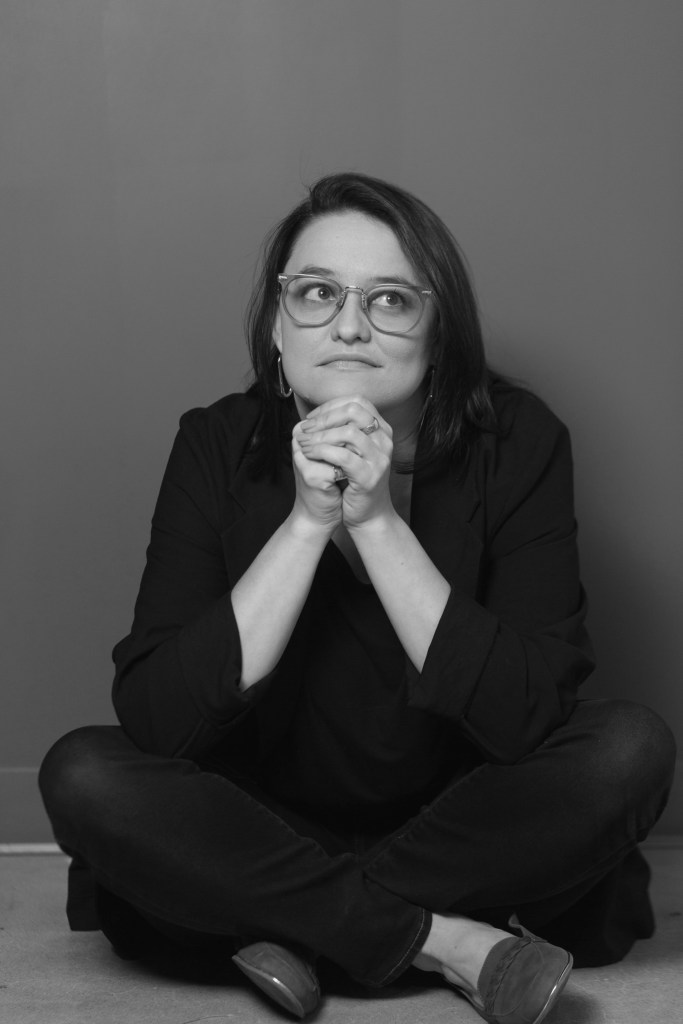
Samantha Ryan is a writer from Tulsa, OK. Her debut novel Pride is set for release in February of 2025 with Rattling Good Yarns Press. Her work has appeared in Marrow Magazine, Fish Gather to Listen, Flash Fiction North, MONO Fiction and more. She lives in Tulsa with her chunky German Shepherd named Harley, an incredibly needy cat named Baxter, and half a dozen plants she can barely keep alive.
 Idle Ink